

Thyme Tea: An Ancient Remedy for Modern Coughs
Long before medicine cabinets were stocked with cough syrups and lozenges, our grandmothers knew the secret to soothing a stubborn cough: a simple cup of thyme tea. This humble herb, plucked fresh from the garden or dried for the pantry, has been a trusted ally against respiratory ailments for generations. Today, modern science is catching up with this age-old wisdom, revealing why thyme deserves a spot in every home apothecary.
Disclaimer: This content is for educational purposes only and reflects traditional folk herbalism practices. It is not intended to diagnose, treat, cure, or prevent disease. Always consult your healthcare provider before using herbal remedies, especially if you're pregnant, nursing, or taking medications.
Affiliate Disclosure: This post may contain affiliate links. If you purchase through these links, I may earn a small commission at no extra cost to you. I only recommend products I personally use and trust. Thank you for supporting this blog!
What Makes Thyme So Powerful?
Thyme contains a dynamic duo of compounds called thymol and carvacrol—powerful volatile oils that give this herb its distinctive aroma and remarkable medicinal properties. These compounds exhibit strong antimicrobial properties against bacteria, fungi, and viruses, making thyme a natural warrior against the germs that cause respiratory infections.
But thyme doesn’t stop there. Its combination of volatile oils and flavonoids work together to provide antitussive (cough-preventing), antispasmodic, and expectorant actions. In simpler terms, thyme helps stop coughing spasms, relaxes airways, and thins mucus so you can cough it up more easily. All things we want!
The Science Behind It
While folk medicine has long trusted thyme, researchers have now confirmed what herbalists have always known. Studies show that thyme extract in combination with ivy reduced coughing fits by nearly 69% compared to 48% with placebo, and patients reached a 50% reduction in coughing two days earlier when treated with the herbal combination.
Research has also demonstrated that thyme extract shows significant anti-inflammatory properties by reducing inflammatory proteins and decreasing pro-inflammatory compounds in human airway cells. This helps explain why a warm cup of thyme tea feels so soothing when you’re battling bronchitis or a persistent cough.
Traditional Uses
Thyme has a long history of use in Europe for treating dry, spasmodic coughs and bronchitis. Its gentle yet effective nature has made it particularly popular for treating coughs in small children, who often can’t tolerate harsher remedies. Thyme helps fight respiratory infections and serves as a natural expectorant that works as an antiseptic and helps expel mucus.
How to Make Thyme Tea
Making thyme tea couldn’t be simpler:
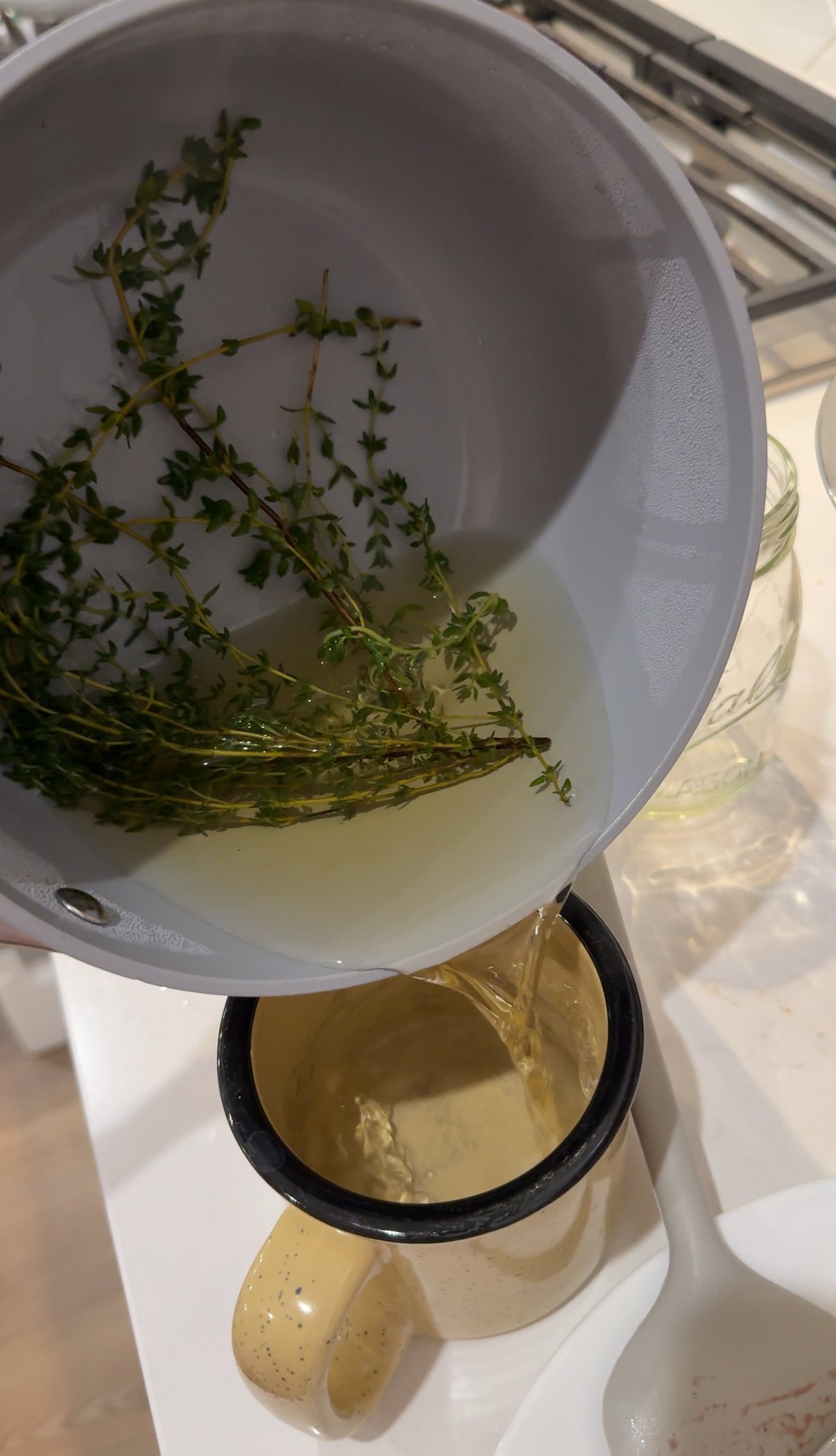
Thyme Tea
Ingredients
Method
- Boil water
- Pour water over the thyme, cover. (Or add thyme to pot + cover)
- Steep for at least 10 minutes.
- Strain and drink warm.
- I often add raw honey for extra throat soothing and support (over age 1).
Notes
The German Commission E recommends drinking a cup of thyme tea several times daily as needed for coughs. You can safely drink up to three cups per day.
When to Use Thyme Tea
Reach for thyme tea when:
- You have a tickle in your throat that won’t go away
- You’re dealing with a dry, spasmodic cough
- You have bronchitis or respiratory congestion
- You need help thinning stubborn mucus
- You want to support your respiratory health during cold season
- Have a sore throat
A Word of Caution
Thyme tea is generally safe when used as recommended. However, keep these precautions in mind:
- A spasmodic cough, especially in young children, can be serious and warrants consultation with a healthcare professional
- Some people may be allergic to thyme or related herbs like basil, oregano, sage, and lavender
- Thyme essential oil should only be used topically, never internally, as it can cause dizziness, vomiting, and breathing difficulties
- Pregnant Women: Medicinal doses of thyme and/or thyme essential oil should not be used, as it may stimulate uterine contractions. *always consult a trusted healthcare professional.
- Breastfeeding: Large amounts of thyme and thyme essential oil are not recommended. *always consult a trusted healthcare professional.
Beyond the Teacup
While we love thyme tea for respiratory support, this versatile herb offers other benefits too. Rich in vitamin C, manganese, and antioxidants, thyme supports overall immune function and may help reduce inflammation throughout the body.
The Bottom Line
Thyme tea is more than just a pleasant-tasting herbal brew—it’s a time-tested remedy backed by modern research. Whether you’re dealing with a nagging cough, bronchitis, or simply want to support your respiratory health during cold season, this aromatic tea offers gentle, effective relief. Best of all, it’s as easy to make as it is effective, requiring nothing more than a few sprigs of fresh thyme and a few minutes of your time.
So the next time a cough strikes, skip the pharmacy aisle and head to your herb garden instead. Your grandmother would be proud.