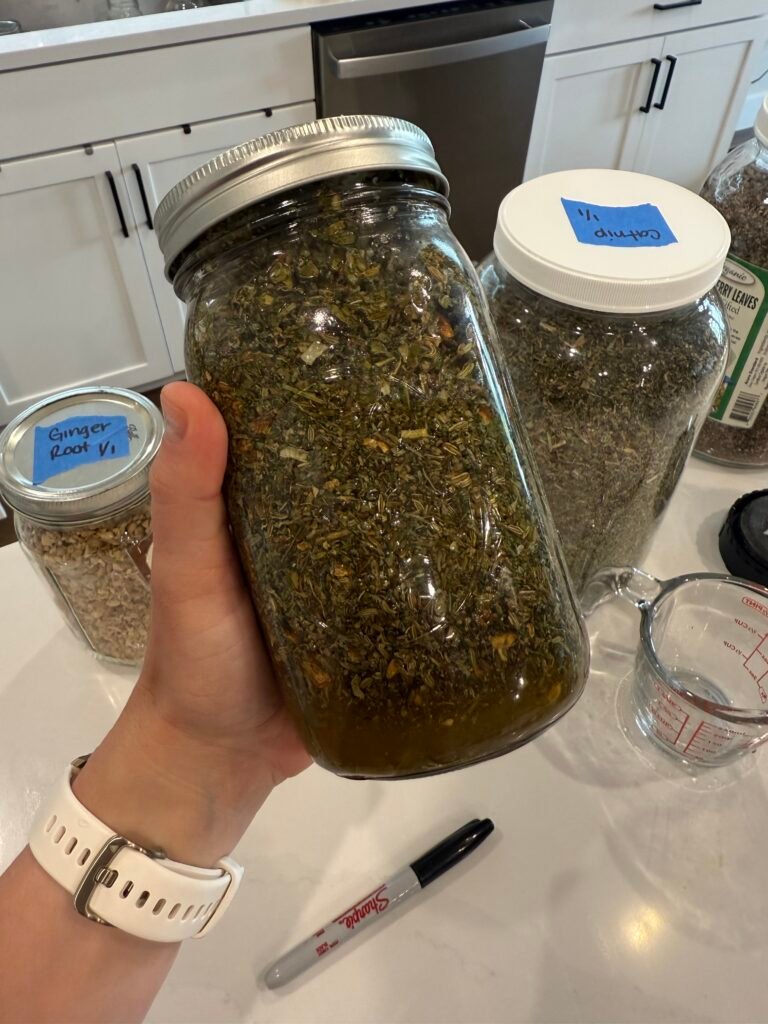

A pot of this tea on the stove has become a staple in our house whenever illness rolls through — and honestly, it’s good enough that we drink it just because we enjoy it.
This blend is rooted in traditional folk herbalism, built around herbs that have been used for generations to support the body through some of the most common and miserable illnesses — the flu, stomach bugs, GI upset, and diarrhea. Each ingredient has a specific job to do, and together they make a tea that is genuinely tasty, mineral-rich, and gentle enough for the whole family, including kids.
Disclaimer: This content is for educational purposes only and reflects traditional folk practices. It is not intended to diagnose, treat, cure, or prevent disease. Consult your healthcare provider before trying new remedies with your children, especially if they have allergies, asthma, or other health conditions. This is not a substitute for medical care—if your child has difficulty breathing, high fever, or worsening symptoms, seek medical attention.
Affiliate Disclosure: This post may contain affiliate links. If you purchase through these links, I may earn a small commission at no extra cost to you. I only recommend products I personally use and trust. Thank you for supporting this blog!
The Blend
This is a ratio-based recipe, which means you can make as much or as little as you like and keep a jar of it in your pantry ready to go all season long.
- 3 parts red raspberry leaf
- 1-2 parts peppermint leaf
- 1 part alfalfa leaf
- 1 part nettle leaf
- ¼ part yarrow flower or boneset
To brew, use ¼ cup of the dry herb blend per 1-2 quarts of boiling water (depending how strong you want it). Steep covered for 15-20 minutes, then strain. Drink hot or cold. I drink mine plain, but for my girls, I stir in a little raw local honey, which has its own soothing properties and makes it much more appealing to little ones.
What Each Herb Brings
Red Raspberry Leaf
Red Raspberry Leaf is the backbone of this blend and one of the most underrated herbs for GI illness. Traditionally used as a nutritive tonic, it has well-established astringent properties that help tone and soothe the digestive tract — making it particularly valuable for diarrhea, including in children. When little ones have loose stools, offer the tea by the tablespoon or in small sips every 10 minutes after each bowel movement rather than in large amounts at once. Red raspberry leaf also has a long history of use for nausea, making it a natural fit whether you’re dealing with the stomach flu or the regular flu.
Peppermint Leaf
Peppermint Leaf is what makes this tea taste genuinely good even when you feel terrible. The menthol in peppermint is a natural antispasmodic — it relaxes the muscles of the digestive tract, which helps ease cramping, bloating, and nausea. It’s also naturally antimicrobial, caffeine-free, and kid-friendly, and it brightens the whole blend with a clean, refreshing flavor.
Alfalfa Leaf
Alfalfa Leaf is the quiet workhorse here — included for its exceptional mineral density. Alfalfa is rich in vitamins A, C, E, and K, along with iron, calcium, magnesium, and phosphorus. When you’re sick and not eating much, getting those nutrients in via a warm cup of tea is one of the gentler ways to support the body without taxing a compromised digestive system.
Nettle Leaf
Nettle Leaf works alongside alfalfa as another deep nutritive herb. It’s loaded with vitamins A, C, and K, and is a good source of iron, calcium, and magnesium. Nettle has antioxidant and anti-inflammatory properties and a long tradition in folk herbalism as a restorative herb — especially useful when the body has been depleted by fever, vomiting, or diarrhea and needs rebuilding from the inside.
Yarrow Flower or Boneset
You only need a small amount of either, but they are doing some of the most active work in this blend when it comes to flu specifically.
Yarrow is a classic diaphoretic herb, meaning it promotes gentle perspiration that supports the body’s natural fever process. Some herbalists call it a “fever breaker.” It also has antimicrobial properties and has traditionally been used for sore throats, coughs, and sinus congestion. YARROW IS NOT RECOMMENDED IN EARLY PREGNANCY – always consult your midwife or OBGYN before taking.
Boneset has an equally deep history in North American folk herbalism as a go-to during influenza — it was actually listed in the U.S. Pharmacopoeia for nearly 100 years. Both herbs are particularly valuable when the flu hits hard, and you need the body to move through it. Use whichever you have on hand.
*We use Yarrow because that is what I have in my home apothecary cabinet.
A Note on Honey
Raw local honey is a wonderful way to sweeten this for little ones. Beyond the flavor, honey has a long history in folk traditions for soothing sore throats and supporting the body during illness. Just remember — honey is never safe for children under 12 months due to the risk of botulism.
Tips for Making It
- Keep a pre-mixed jar of the dry herbs in your pantry so you’re not scrambling when someone gets sick.
- Always steep covered — the lid keeps the volatile oils from the peppermint in the tea where they belong.
- Brewed tea keeps in the fridge – we use ours within 3-5 days, and then we will make a new batch. Reheat gently or serve cold over ice.
- For very young children, brew it weaker, cool it fully before offering, and always check with your pediatrician first.
- For diarrhea specifically: we offer by the tablespoon or in small sips every 10 minutes after each loose bowel movement rather than a full cup at once.
Where to Find Your Herbs
You can find most of these herbs on Amazon — I’ve linked everything in my Amazon storefront for easy shopping.
If you want to go a step further, I really love sourcing herbs through Azure Standard. They carry high-quality bulk herbs at great prices, and if you have a local drop point it’s one of my favorite ways to stock the pantry. I’ll always try to get them here when I can.
Another great source for herbs is Mountain Rose Herbs, though they are sometimes more expensive.
Flu Tea
Ingredients
Method
- To brew, use ¼ cup of the dry herb blend per 1-2 quarts of boiling water. Drink hot or cold. I don't sweeten mine, but for my girls I stir in a little raw local honey — which has its own soothing properties and makes it much more appealing to little ones.
- Steep covered for 15-20 minutes, then strain.
- Drink hot or cold.
- Sweeten to taste I don't sweeten mine, but for my girls, I stir in a little raw local honey, which has its own soothing properties and makes it much more appealing to little ones.
Sources & Further Reading
Books:
- Rachel Weaver — Be Your Own Doctor
- Rachel Weaver — Be Your Own Doctor II
- Rachel Weaver — Be Your Child’s Pediatrician
- Aviva Jill Romm — Naturally Healthy Babies and Children…
- Rosemary Gladstar — Medicinal Herbs: A Beginner’s Guide
- Rosemary Gladstar — Herbs for Children’s Health
Websites:
- Colorado School of Clinical Herbalism — Red Raspberry Leaf Monograph: https://clinicalherbalism.com/red-raspberry-leaf/
- Traditional Medicinals — Raspberry Leaf Herb Library: https://www.traditionalmedicinals.com/blogs/herb-library/raspberry-leaf
- Healthline — Red Raspberry Leaf Tea Benefits: https://www.healthline.com/nutrition/red-raspberry-leaf-tea
- Healthline — Peppermint Tea Benefits: https://www.healthline.com/nutrition/peppermint-tea
- MDLinx — Ginger and Peppermint for Nausea: https://www.mdlinx.com/article/ginger-and-peppermint-two-herbal-heavy-hitters-to-treat-nausea-naturally
- WebMD — Nettle Leaf Health Benefits: https://www.webmd.com/diet/health-benefits-nettle-leaf
- PMC — Nutritional Properties of Stinging Nettle: https://pmc.ncbi.nlm.nih.gov/articles/PMC9253158/
- Healthline — Alfalfa Benefits: https://www.healthline.com/nutrition/alfalfa
- Wellness Mama — How to Use Alfalfa: https://wellnessmama.com/remedies/alfalfa-herb-profile/
- Herbal Academy — Yarrow for Fever and Flu: https://theherbalacademy.com/blog/yarrow-as-a-natural-remedy-for-fever-and-flu/
- LearningHerbs — Yarrow Uses and Plant Profile: https://www.learningherbs.com/blog/yarrow-uses
- WishGarden Herbs — Boneset Benefits: https://www.wishgardenherbs.com/blogs/wishgarden/bonset-herb-benefits-a-hidden-gem-for-boosting-immunity
- The Outdoor Apothecary — Boneset Medicinal Uses: https://www.outdoorapothecary.com/herb-boneset/