

I Put the Top 4 “Clean” Kids Vitamins to the Test for 9 Months.
As a former ER nurse and a realistically holistic mom, I don’t believe in guessing when it comes to my kids’ health.
But I also don’t believe in chasing perfection.
For nine months, I intentionally rotated and tested some of the most popular “clean” kids vitamins to see how they actually worked in real life — not just how they looked on a label.
This wasn’t about finding the best kids’ vitamin.
It was about finding what actually works — for real kids, with real preferences, in real seasons of life.
This is the clinical + real-world review.
Affiliate disclosure: Some links in this post may be affiliate links, which means I may earn a small commission if you choose to make a purchase — at no additional cost to you. I only share products I personally use, trust, and would recommend, regardless of compensation.
Truthfully, There Is No “Best” Kids Vitamin
There is:
- what your child will eat
- what fits your values
- what fills their gaps
Different kids.
Different seasons.
Different needs.
A perfect nutritional profile is useless if it sits in the cabinet.
What looks “best” on a label doesn’t matter if your kid won’t take it.
Taste, texture, consistency, and real life matter just as much as ingredients.
Why Ingredients Matter
(and where most kids vitamins miss the mark)
Most kids vitamins fail because they prioritize:
- bright colors
- candy-like taste
- low-cost ingredients
Instead of what actually supports a developing nervous system.
My non-negotiables:
✔ No synthetic dyes (neurotoxic)
✔ No high-fructose corn syrup or added sugars
✔ No unnecessary gums or fillers
✔ Bioavailable nutrient forms
→ methylated B12 instead of cyanocobalamin
✔ Transparency in ingredient sourcing and formulation
✔ Third-party testing or clear quality standards
If it doesn’t meet these standards, it’s a no for us — no matter how popular it is.
Why I Rotate Vitamins
I don’t want my kids only taking vitamins if they’re gummies.
But I also don’t want them refusing vitamins altogether because they expect candy.
So I rotate.
Rotation helps:
- normalize different textures
- prevent sugar-based expectations
- cover nutritional gaps more comprehensively
- remove daily negotiations
Vitamins are not a reward in our house.
They’re just part of life.
The Brands We Tested
For this season, I rotated between:
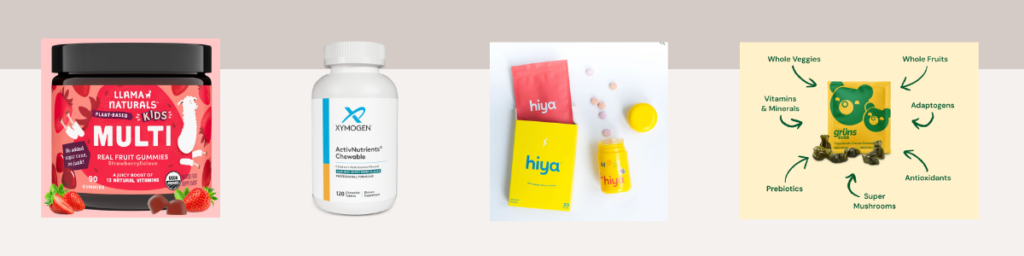
- Hiya
- Xymogen
- Llama Naturals
- Grüns
Here’s how each one actually went in our home.
Hiya — Simple Daily Baseline
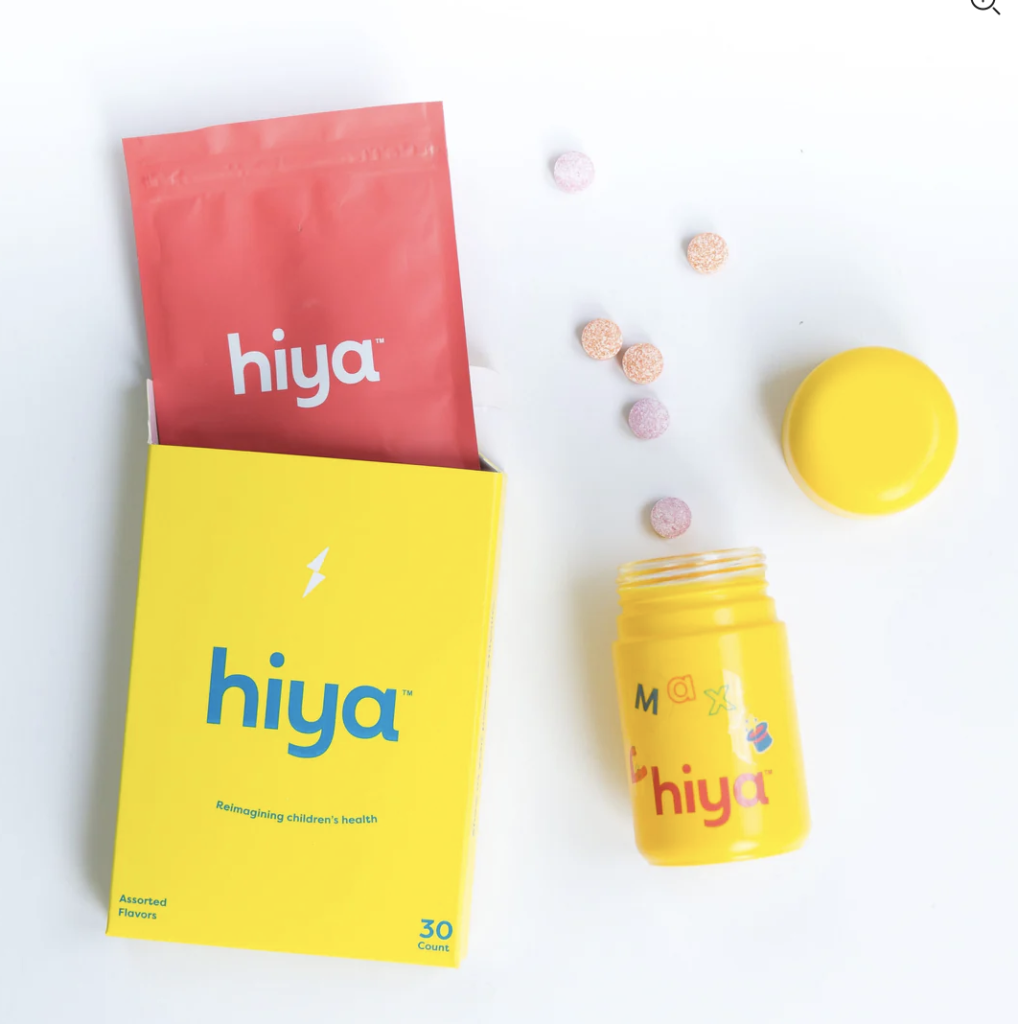
Both of my kids love Hiya.
I know some people say they’re chalky — and they are — but my kids genuinely like them.
They’re excited to take them every day, and that counts for a lot.
What stands out:
- No added sugar
- Methylated folate & B12 (bioavailable forms)
- Vitamin K2 included (needed alongside vitamin D3 to help guide calcium to bones and teeth)
- Lower, more conservative %DV (daily value)
- 1 tablet/day = easy compliance
- Also offers probiotic + nighttime vitamins
Best for:
Families who want a simple daily multivitamin without turning vitamins into candy.
Reality check:
Hiya is not designed to mega-dose or correct significant deficiencies — and that’s intentional.
For us, Hiya worked really well as a daily baseline.
Xymogen — Clinical-Grade Nutrient Repletion
This one is very different.
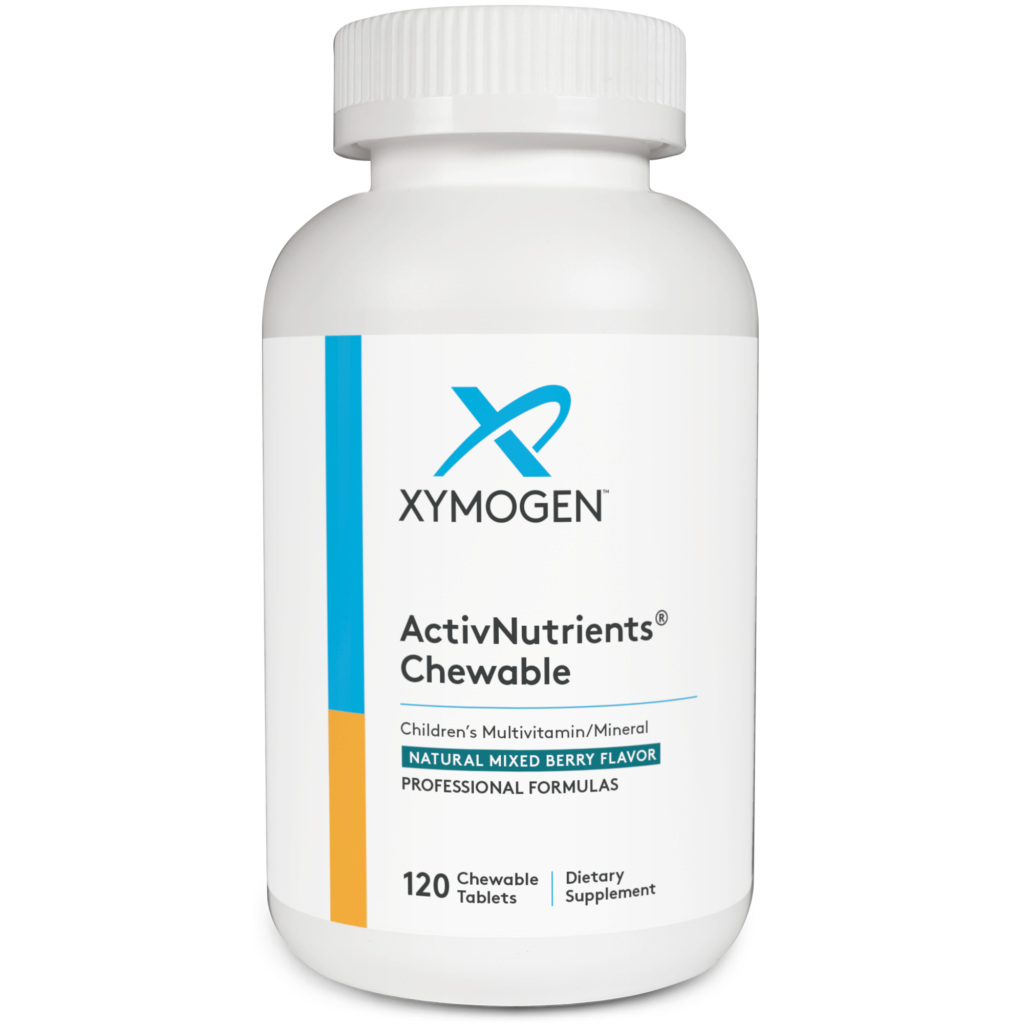
Xymogen has a similar texture to Hiya — chalky, flatter discs — but the tablets are bigger.
My oldest eats them without any issue.
My youngest needed more encouragement at first. She still likes the flavor — it’s just more tablet than Hiya.
What stands out:
- Methylated B vitamins (active forms your body can use immediately, especially important for kids who don’t convert well)
- Chelated Albion® minerals (minerals bound to amino acids, which improves absorption and reduces stomach upset)
- Vitamin K2 (MK-7)
- Very high %DV on multiple nutrients
- Designed for practitioner use
Label dosing (and what I actually do):
The label dosing looks intense:
- Ages 1–3: 1–2 tablets, twice daily
- Ages 4+: 2–4 tablets, twice daily
I don’t use it that way.
If your child isn’t in a major nutritional deficit, you don’t have to follow max dosing.
I give:
- my 2-year-old: 1 tablet/day
- my 4-year-old: 2 tablets/day
That’s it.
Best for:
At full dose: Picky eaters, restricted diets, or short-term nutrient repletion.
Supplementing or rotating into your routine when you want deeper nutrient coverage, or during seasons when your child may be more nutritionally depleted.
The recommended label dosing is higher because this formula is designed for nutrient repletion — meaning it’s intended to help restore nutrient levels when intake has been limited, absorption has been poor, or needs are temporarily higher.
That doesn’t mean every child needs the full dose every day.
In our home, I use Xymogen as a rotational supplement rather than a daily baseline. I dose lower than the label recommendation and rotate it alongside gentler options, which allows us to get the benefits of higher-potency nutrients without overdoing it or relying on long-term high dosing.
Reality check:
Higher tablet count + stronger dosing = not my everyday go-to for most kids.
We rotate this in intentionally.
Llama Naturals — Organic + Gentle Consistency
Both of my kids love Llama now — but it didn’t start that way.
My youngest actually refused them at first. She preferred Hiya or Xymogen and wouldn’t chew the gummies.
I kept offering them casually. After about a month, she decided she liked them.
Now she loves them.
What stands out:
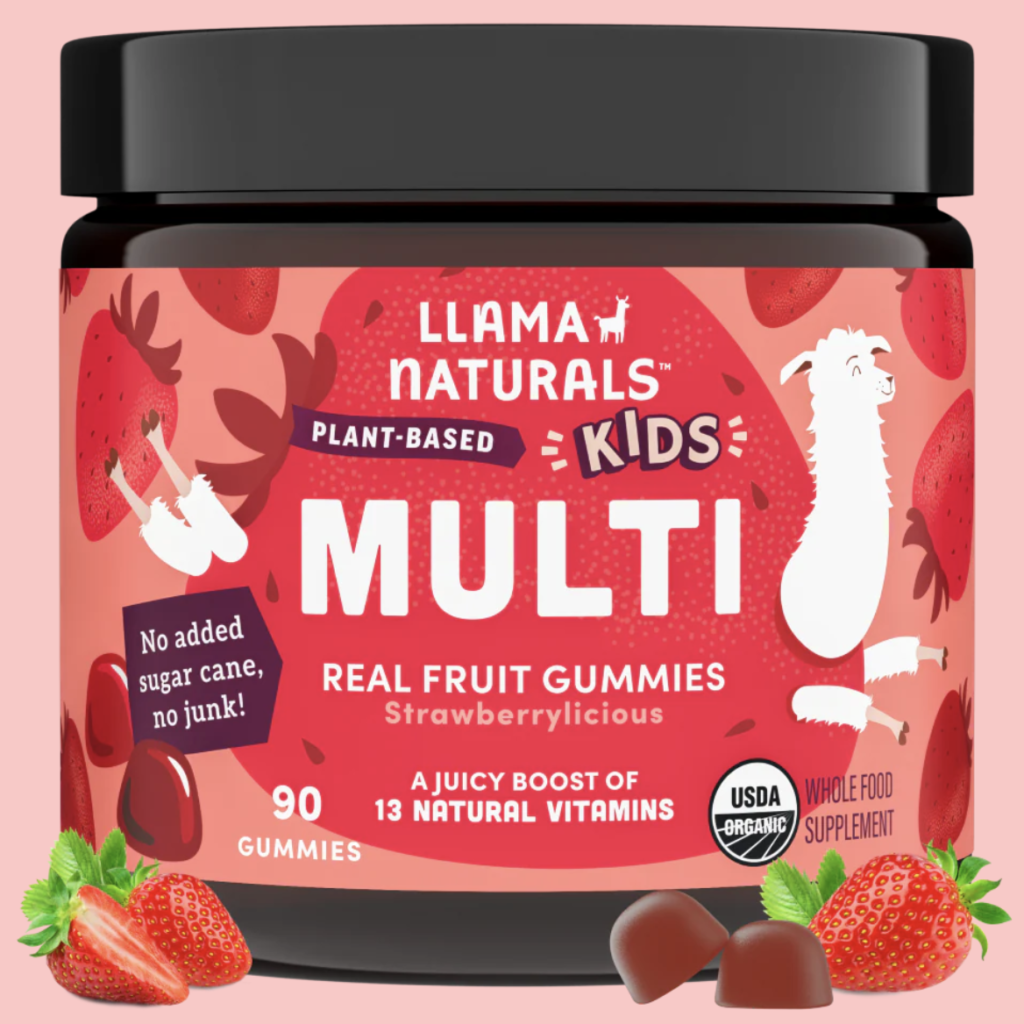
- USDA organic
- Real fruit-based
- Third-party tested (potency, purity, microbes)
- Lower vitamin coverage (13 vitamins, minimal minerals)
Important note:
Yes, they’re gummies — but they do not use added sugar.
The sweetness comes from fruits and vegetables, which is different from cane-sugar-sweetened gummies.
We use:
- the multivitamin
- the prebiotic + probiotic
- the elderberry gummies
Best for:
Younger kids or families who prioritize organic ingredients and taste.
Reality check:
Still a gummy. Great for consistency — not for heavy nutrient lifting.
We rotate this in our home.
Grüns — Very Kid-Dependent
This one is highly kid-dependent.
My oldest really likes Grüns. She thinks the shapes are fun and eats them without a problem.
My youngest?
Absolutely not.
She has refused them every single time we’ve tried. No amount of encouragement worked.
Important distinctions:
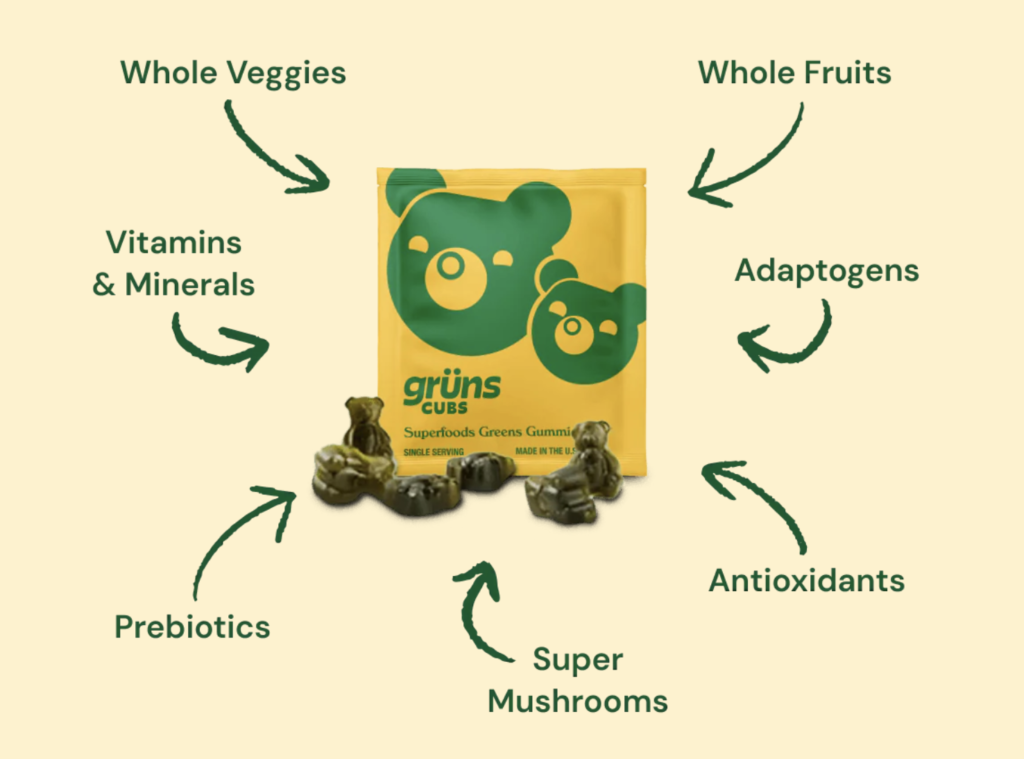
- This is not just a multivitamin
- 60+ ingredients (greens, mushrooms, adaptogens)
- Includes prebiotic fiber
- Comes as a full packet, not one gummy
- Your child must eat the entire packet
There are two versions:
- low sugar (allulose)
- higher sugar (cane sugar)
I would only buy the sugar-free version.
The sugar version has 7g of added sugar, which isn’t something I’m personally comfortable with.
Best for:
Kids who struggle with veggies and need gut + micronutrient support — and will actually eat them.
Reality check:
Higher ingredient load ≠ better for every child.
Also more “snack-like” than vitamin.
For us:
✔ great for my oldest
✘ not happening for my youngest
Cost Comparison: What These Kids Vitamins Actually Cost
One of the biggest questions I get after sharing ingredient quality is cost — especially when you factor in subscriptions, real-life dosing, and how long a bottle actually lasts.
Below is a real-world pricing comparison using typical retail pricing and the discount codes I personally have access to.
| Brand | Retail Price | Servings | Cost per Serving (Retail) | My Discount | Cost per Serving (With Discount) |
|---|---|---|---|---|---|
| Hiya | ~$30 / 30 days | 30 servings | ~$1.00/day | 50% off first subscription | ~$0.50/day (first month) |
| Llama Naturals | ~$26.99 / 90 gummies | ~30-45 servings | ~$0.60 – 0.90/day | 20% off (Code ASHLEYG) | ~$0.48 – 0.72/day |
| Xymogen ActivNutrients Chewable | ~$53.99 / 120 tablets | tablet-based (for us 60-120 servings) | ~$0.45/tablet | 20% off (Fullscript) | ~$0.36/tablet |
| Grüns Cubs (Low Sugar) | ~$66.99 / 28 packets | 14 packets | ~$2.39/packet | ~20% off (with additional welcome offer) | ~$1.01/packet with current welcome offer (60% off) |
Pricing may vary slightly by retailer and promotions. Calculations are based on typical retail pricing at the time of writing.
Why I Rotate Llama and Xymogen
When I factor in cost, ingredient quality, and how I actually dose these vitamins, Llama Naturals and Xymogen end up being the most cost-effective options for our family.
Hiya is a great baseline multivitamin — especially with the 50% off first subscription — but once that promotion ends, it becomes more expensive as a daily option.
Xymogen, even at full strength, is surprisingly affordable when I dose it the way I do:
• 1 tablet for my 2-year-old
• 2 tablets for my 4-year-old
Because I’m not using the max label dosing, the cost per day stays reasonable while still giving deeper nutrient coverage— especially when ordering through Fullscript, where I can offer 20% off all your supplements. Access that discount HERE.
Llama Naturals, with a 20% discount (+ more if you put it on a subscription), is one of the most affordable options per serving — and both of my kids will actually take it.
Rotating these two allows me to cover daily baseline needs and higher-potency nutrient support without relying on subscriptions or ending up with excess vitamins at the end of the month.
The Bottom Line
There is no universally “best” kids vitamin.
There is:
- what your child will take
- what aligns with your values
- what supports them in this season
Rotation matters.
Consistency matters.
Real life matters.
A vitamin your child refuses helps no one.
Final Thoughts
Choosing supplements for kids isn’t about finding a perfect product — it’s about building a system that works in real life.
Different kids need different things at different times. Taste, absorption, season, and consistency all matter. That’s why flexibility matters more than loyalty to a single brand.
When supplements feel simple and sustainable, they actually get used — and that’s what makes them helpful.
What I’d Love to Know
If you’re comfortable sharing:
- Which vitamin is your child currently taking?
- Or what’s been the hardest part about choosing one?
NOTE: I’ll continue updating this series as we test more products and move through different seasons.
Disclaimer: This content is shared for educational purposes only and is not medical advice. Always consult a trusted healthcare professional before starting something new for your child.

Thank you for the honest reviews of these. I struggle big time with vitamins for the kids and am trying different ones. We’ve tried the liquid type, can’t remember the name but the kids hated it. We tried Hiya but my youngest would just hold them in her cheeks and spit them out at school. We are currently trying to EllaOla but this is still a struggle. My daughter is 5 and she needs them the most. Ends up costing so much and a huge waste when they won’t take them. I may try the gummy options you have listed, especially the greens one. We will see what sticks. Our 7 year olds is really pretty good at taking them no matter what form. So glad I found your instagram post and the link to your blog.
Hi Kayla, Thank you so much! I can definitely relate to trying multiple kinds and spending SO MUCH money on vitamins my kids wouldn’t eat. I haven’t tried EllaOla yet, but I have some friends who have. I’m sorry it’s been a struggle. It truly is SO individualized. If you are having issues with her taking the others, the Llama vitamins are DELICIOUS. My kids prefer the taste of these the best. I could not get my youngest to take the Gruns vitamins EVER. Though they do have great ingredients. Let me know what one you get and if she ends up liking them!! Thank you for being here, and for your feedback. I truly appreciate you!