

Fire cider is more than just an immune-boosting tonic—it’s a piece of living herbal history.
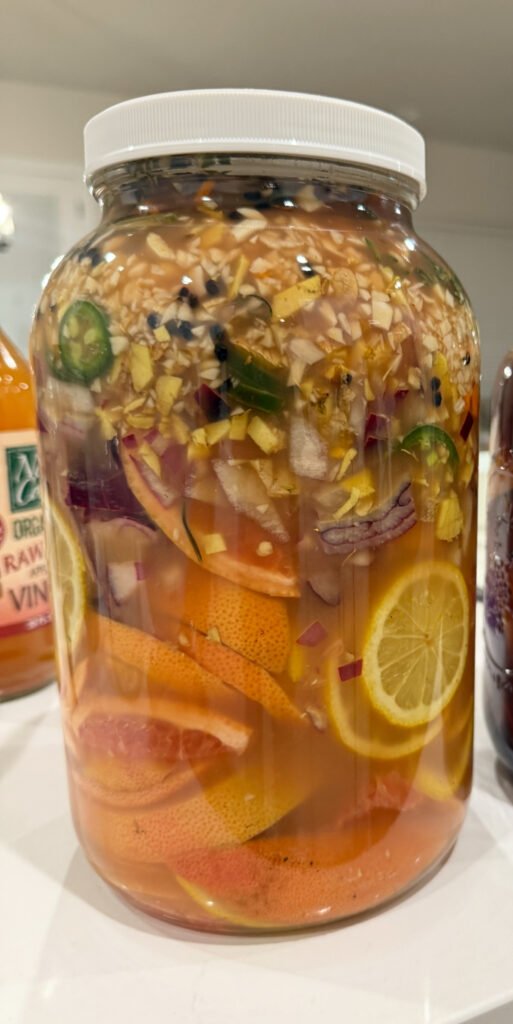
Created by renowned herbalist Rosemary Gladstar in the late 1970s at the California School of Herbal Studies, fire cider was born from a desire to bring medicinal herbalism back into people’s kitchens. Gladstar wanted her students to make herbal preparations that were as much food as they were medicine, and fire cider became one of those beloved “crossover” recipes.
For decades, fire cider has been shared freely among herbalists, passed from teacher to student, friend to friend, in the true spirit of community herbalism. The name itself reflects the pungent, warming plants in the recipe — horseradish, ginger, garlic, onion, and cayenne pepper—which help ward off infections, colds, flu, and bronchial congestion.
This recipe is hot, spicy, and strong — exactly what you want when you feel something coming on or need to warm up from the inside out during cold months.
If you are looking for a gentler version, check out my non-spicy kid-friendly fire cider version.
Disclaimer: This content is for educational purposes only and reflects traditional folk herbalism practices. It is not intended to diagnose, treat, cure, or prevent disease. Always consult your healthcare provider before using herbal remedies, especially if you're pregnant, nursing, or taking medications.
Affiliate Disclosure: This post may contain affiliate links. If you purchase through these links, I may earn a small commission at no extra cost to you. I only recommend products I personally use and trust. Thank you for supporting this blog!
A Note on Tradition
Fire cider preparations have been used for hundreds of years, though Rosemary Gladstar coined the specific term “fire cider” in the late 1970s. The recipe has always been meant to be adapted, personalized, and shared freely.
In the spirit of that tradition, I encourage you to make this recipe your own. Use what you have access to, adjust the heat level to your preference, and don’t stress about perfection. Because this is a folk preparation, the ingredients can change from year to year depending on when you make it and what’s growing around you.
Ingredients + Why They’re Included
The beauty of fire cider is in the synergy of warming, antimicrobial, circulation-boosting ingredients that work together to support your immune system and digestion.
The Essential Base (Rosemary Gladstar’s Original)
These are the core ingredients that give fire cider its signature punch:
Fresh Horseradish Root
The sinus-clearing powerhouse. Horseradish is intensely antimicrobial, supports respiratory health, and gets your circulation moving. It’s also a natural expectorant that helps break up congestion. *I could not find fresh horseradish root in my area. I used this organic dried horseradish root instead.*
Fresh Ginger Root
Warming, anti-inflammatory, and excellent for digestion. Ginger supports circulation, eases nausea, and has potent antimicrobial properties. It’s also what gives fire cider that spicy warmth.
Fresh Garlic (whole cloves)
Nature’s antibiotic. Garlic contains allicin, a powerful antimicrobial compound that supports immune function. It’s antiviral, antibacterial, and antifungal—basically the MVP of immune support.
Onion (yellow or red)
Rich in quercetin and sulfur compounds that support immune health and reduce inflammation. Onions also contain allicin and have antimicrobial, antiviral, and antifungal properties to help the body fight off infections.
Hot Peppers (cayenne, jalapeño, or habanero)
These bring the fire to fire cider. Capsaicin (the compound that makes peppers hot) stimulates circulation, supports metabolism, helps break up mucus, and provides pain relief. The hotter, the better — if you can handle it.
Traditional Add-Ins
These herbs and ingredients are commonly added to enhance flavor and benefits:
Turmeric (fresh or dried)
Golden anti-inflammatory wonder. Turmeric supports the immune system, reduces inflammation, and adds a beautiful color. If using fresh, be warned — it stains everything.
Fresh Citrus (lemon, orange, grapefruit)
Vitamin C, bioflavonoids, and bright flavor. Citrus adds antimicrobial properties, supports immune function, and helps balance the intense heat and vinegar tang.
Fresh Rosemary
Antioxidant-rich and antimicrobial. Rosemary supports circulation, cognitive function, and has traditionally been used for respiratory health.
Fresh Thyme
A respiratory system ally. Thyme is antimicrobial and has been used traditionally to support lung health and ease coughs.
Black Peppercorns
Adds heat and enhances the absorption of turmeric (thanks to piperine). Also supports digestion and circulation.
Optional Powerhouse Additions
Feel free to add any or all of these:
Elderberries (dried)
The immune-boosting superstar. Rich in antioxidants and traditionally used to shorten the duration of colds and flu.
Echinacea Root (dried)
Classic immune supporter. Echinacea has been used traditionally to prevent and shorten the duration of upper respiratory infections.
Astragalus Root (dried)
A gentle, long-term immune tonic. Astragalus supports overall vitality and resilience, especially during times of stress.
Cinnamon Sticks
Warming, antimicrobial, and supports healthy blood sugar balance. Adds a touch of sweetness too. Make sure you use Ceylon cinnamon.
Star Anise
Antimicrobial and respiratory supportive. Adds a subtle licorice flavor.
Fresh or Dried Sage
Antimicrobial and traditionally used for throat health and immune support.
Fresh Parsley
Rich in vitamins and minerals, supports kidney function and adds freshness.
The Base: Apple Cider Vinegar
Raw, Organic Apple Cider Vinegar (with the mother)
This is non-negotiable. The vinegar is what extracts all the beneficial compounds from the herbs and vegetables. Raw apple cider vinegar contains naturally occurring acids and enzymes, and the “mother” is full of beneficial bacteria. It also supports digestion and has its own immune-supportive properties.
After Straining: Raw Honey
Raw Local Honey
Added after straining to sweeten and make the fire cider drinkable. Honey has antimicrobial properties, soothes sore throats, and supports immune health. Plus it balances the intense heat and vinegar bite. Choose raw local honey for the freshest and most nutrient-dense honey.
How I Use Fire Cider
For Daily Prevention (During Cold & Flu Season):
Take 1–2 tablespoons daily, either straight as a shot or mixed into water, juice, or sparkling water. Some people prefer to take it in the morning to kickstart their system.
At the First Sign of Illness:
When I feel something coming on (scratchy throat, fatigue, congestion), I take 1–2 tablespoons every 2–4 hours throughout the day. This is when fire cider really shines—hitting it hard and early.
During Active Illness:
Take 1–2 tablespoons 3–4 times daily until symptoms subside. You can take it straight, mix it into warm water with extra honey, or add it to bone broth.
How to Take It:
- Straight shot: For the brave. Chase it with water or juice if needed.
- Mixed into drinks: Add to water, juice, or sparkling water
- In warm water with honey: Soothing for sore throats
- Added to food: Mix into salad dressings, marinades, soups, or drizzle over roasted vegetables
- In cocktails: Bloody Marys, hot toddies, or wellness shots
A Note on Intensity:
Fire cider is strong. If you’re new to it, start with 1 teaspoon and work your way up. Some people love taking it straight, others need to dilute it. There’s no wrong way—just find what works for you.
Fresh vs. Dried Herbs: Conversion Guide
General Rule: When substituting dried herbs for fresh, use about ⅓ of the amount (dried herbs are more concentrated).
Conversions:
- 1 cup fresh ginger = ⅓ cup dried ginger
- 1 cup fresh turmeric = ⅓ cup dried turmeric
- Large handful fresh thyme (about ¼ cup) = 2 tablespoons dried
- 3 sprigs fresh rosemary = 2 tablespoons dried
- 4 fresh sage leaves = 1 tablespoon dried
Fresh is always better for: Horseradish, ginger, garlic, onion, hot peppers, citrus
Dried works well for: Turmeric (if fresh unavailable), echinacea, astragalus, elderberries, culinary herbs in a pinch
Pro Tips
Don’t skip the horseradish. It’s what gives fire cider its signature kick and powerful antimicrobial punch.
Adjust the heat. If you’re heat-sensitive, start with 1–2 milder peppers and work your way up. If you love spice, go for habaneros or ghost peppers.
Save the strained pulp. The leftover herbs can be used to make chutney or added to soups and stews for extra flavor.
Make it your own. This recipe is a starting point. Add what you love, skip what you don’t have, and trust the process.
Yield: Makes approximately 3–4 cups of finished fire cider after straining and adding honey.
*I double mine!
A Final Word
Fire cider is powerful, potent, and unapologetically strong. It’s not for the faint of heart—but if you’re looking for a traditional herbal remedy that really works, this is it.
Make a batch every fall, keep it in your fridge, and reach for it at the first sniffle. Your immune system will thank you.

Traditional Fire Cider Recipe (Half-Gallon Batch)
Equipment
- 1 half-gallon glass jar (64 oz)
- 1 Strainer
- 1 Plastic Wide Mouth Lid or cover metal with parchment paper
- 1 Cheescloth
Materials
The Essential Base:
- 4-5 cups raw apple cider vinegar with the "mother"
- ½ cup fresh horseradish root chopped or grated
- ½ cup fresh ginger root chopped or sliced
- 1 whole head garlic 10–12 cloves, peeled and chopped
- 1 medium onion chopped (I like red)
- 2-4 whole hot peppers cayenne, jalapeño, habanero, chopped (or 1–2 teaspoons ground cayenne)
Traditional Add-Ins:
- ¼ cup fresh turmeric root chopped (or 2 tablespoons dried turmeric powder)
- 1 whole lemon sliced (zest and all)
- 1 whole orange sliced (optional)
- ½-1 whole grapefruit sliced (optional)
- 2-3 sprigs fresh rosemary or 2 tablespoons dried
- 1 handful fresh thyme or 2 tablespoons dried
- 1 tablespoon whole black peppercorns
Optional Powerhouse Additions:
- 3-4 tablespoons dried elderberries
- 2 tablespoons dried echinacea root
- 2 tablespoons dried astragalus root
- 2-3 whole cinnamon sticks *ceylon
- 2-3 whole star anise
- 3-4 sage leaves or 1 tablespoon dried
- 1 teaspoon whole cloves dried
After Straining:
- ½-1 cup raw local honey to taste
Instructions
- Prep Your Ingredients. Chop or grate all fresh roots and vegetables. The smaller you chop them, the more surface area for the vinegar to extract from. Slice citrus into rounds. If using fresh herbs, give them a rough chop or bruise them to release their oils.
- Layer everything into your jar. Add all the chopped roots, vegetables, herbs, spices, and citrus to your half-gallon jar. Pack it in—you want it full but not so tight that the vinegar can’t circulate.
- Cover completely with vinegar. Pour raw apple cider vinegar over all the ingredients until everything is fully submerged by at least 2–3 inches. You may need more or less depending on how tightly you packed the jar. Everything must stay below the vinegar line to prevent mold.
- Protect your lid. If using a metal lid, place a piece of parchment paper or wax paper between the jar and lid to prevent the vinegar from corroding the metal. Plastic lids work great for this.
- Seal and store. Put the lid on tightly. Store the jar in a dark, cool place (kitchen cupboard, pantry) at room temperature.
- Shake daily. Shake the jar every day for 3–4 weeks to help with the maceration process. This helps extract more compounds from the herbs and keeps everything mixing.
- Steep for 3–6 weeks. The longer it steeps, the stronger it gets. Minimum is 3 weeks, but 4–6 weeks is ideal for maximum potency.
- Strain thoroughly. After steeping, strain out all the solids using a fine mesh strainer lined with cheesecloth. Squeeze every last drop from the pulp—that’s where the good stuff is.
- Add honey. Warm the honey slightly (only if you need to. Just enough to make it pourable—don't overheat or you'll destroy its beneficial properties), then stir it into the strained vinegar. Start with ½ cup and taste. Add more until it reaches your desired sweetness. Your fire cider should taste hot, spicy, and sweet.
- Bottle and store. Transfer to clean glass bottles with tight-fitting lids. Fire cider will keep for several months unrefrigerated if stored in a cool pantry, but it's better to store in the refrigerator if you have room.